CLIENT: Hmong Museum (St. Paul, MN)
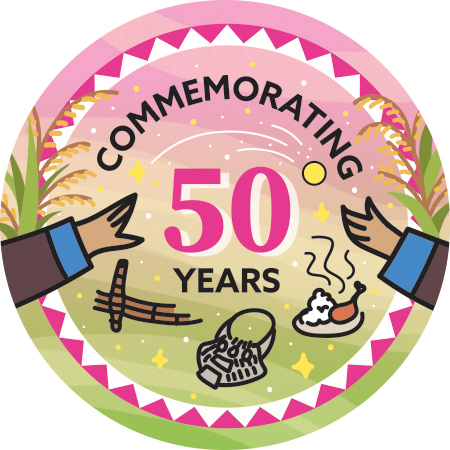
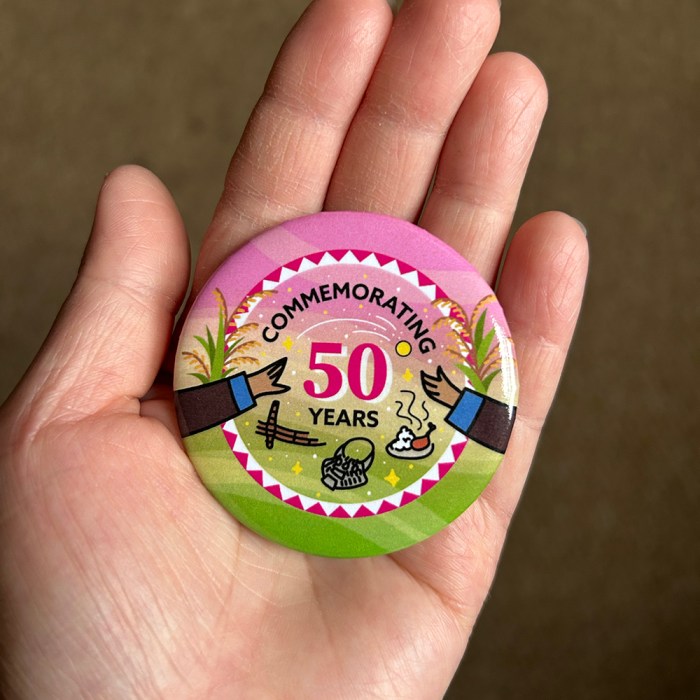
This design was created for a button design contest hosted by the Hmong Museum during the month of April 2025. The button was one of four chosen to be created into a button for the museum to commemorate 50 years of Hmong people in America.
The theme for the button was “commemorate resilience and remembering Hmong American experiences in the last 50 years.”
Design requirements included having the art fit with the theme, creating the artwork to fit onto a 1.5 inch circle button, and including the words “Commemorating 50 Years”.
PROCESS
While designing this button, I reflected on what in the Hmong community have stuck with us during our time here in the United States? Immediately, I thought of the Hmong New Year celebrations. Even before arriving in America, the Hmong New Years have always been a way our people celebrated our hard work and reconnected with family, friends, and the community. It is a tradition we carried with us across oceans and generations. The dance, music, food, and Hmong clothes we wear to these events are ways we stay connected to our roots. Although many of us are scattered throughout the country, the new years are our annual reminders to come together and commemorate our resilience and accomplishments as Hmong people.


Above are two initial sketches for the button design.


After refining the colors and design more, I had a few colleagues helped me narrow down one to proceed with. When designing the button, I wanted to use themes and colors that were present in the Hmong culture. Magenta and lime green were two colors that were prominent in some traditional Hmong attire, so I decided to move forward with those colors.
The final design is a reflection of a typical Hmong New Year experience.
First, the “ball toss” exchange between two hands throwing a ball from left to right. Traditionally at the Hmong New Years, ball tossing was done between two people as a courtship activity. Nowadays people do it for fun, to reconnect, or to pass time.
The rice plants shown behind the hands are a staple plant traditionally harvested during the Hmong New Years.
The brown “qeej” instrument on the bottom left represents music played at the Hmong New Years. Sometimes there will also be other entertainment such as singing or dancing.
The “xauv,” a traditional Hmong necklace in the middle, represents Hmong clothes worn.
Finally, the rice and chicken dish on the right represents food served at these events.
The design is encompassed by a ring with magenta and white triangles. The triangular “mountain design” is inspired by those seen on Hmong clothes and embroidery, which Hmong people carried with them for many generations. To me, I see these designs as a symbol of strength and unity.

Back to Design
 DUACHAKA HER